
[2/6] How to spend more time in the Quadrant II
Manage time effectively to focus on Quadrant 2 tasks, which will automatically shrink the workload for you in Quadrant 1 and 3. Learn it all in this article.
Manage time effectively to focus on Quadrant 2 tasks, which will automatically shrink the workload for you in Quadrant 1 and 3. This approach is rooted in the Time Management Matrix, a framework popularized by Stephen Covey in his book 'The 7 Habits of Highly Effective People.' Covey’s work has helped highly effective people improve productivity and decision making by categorizing tasks based on urgency and importance. The time management matrix involves recognizing the true value of tasks and prioritizing what is important in your daily schedule. By using the time management quadrants, you can make better decisions about which tasks deserve your attention and align your actions with your long-term goals. Learn it all in this article.
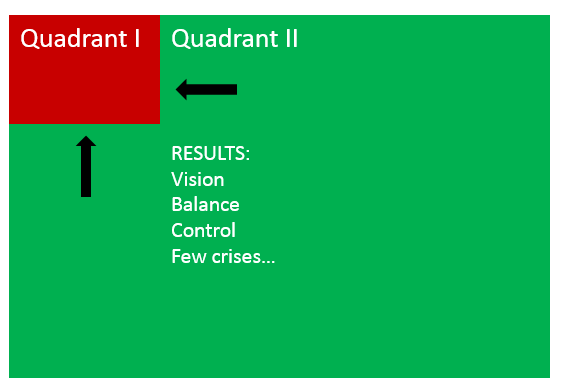
The quadrant II is important in order to be in control of your life, and to feel balanced. But often, we just don’t have time to spend in Quadrant II because some more urgent tasks take over. How do you spend more time in Quadrant II?
Introduction to the Eisenhower Matrix
Effective time management, the key to making real progress in both your personal and professional life, is especially critical for the likes of busy professionals, entrepreneurs, and project managers who are juggling multiple responsibilities at any given time. The Time Management Matrix - also known as the Eisenhower Matrix or Management Matrix for that matter - is a powerful tool designed to help you prioritise your tasks and get a grip on your workload so you can squeeze the maximum amount of impact out of each day.
The Eisenhower Matrix involves breaking down your tasks into four distinct boxes, based on just how urgent and important they are. It's a pretty simple yet effective framework that lets you focus on the things that really matter - the tasks that are both urgent and important - and avoid getting bogged down in non-essential activities or simply responding to things that other people think are a priority but aren't actually all that important.
Here's how the four boxes break down:
Urgent & Important (Quadrant 1): The tasks that demand your immediate attention, and will have serious consequences if you don't get to them - things like looming deadlines that are hanging over your head, a crisis that just needs to get sorted out and can't wait, or a problem that needs to get dealt with as soon as possible.
Important but Not Urgent (Quadrant 2): These are the tasks that are going to be really important for your long-term success, personal growth, and professional development - but don't necessarily require an immediate response. The thing is, if you get these tasks done now, it will save you a lot of grief in the long run.
Urgent but Not Important (Quadrant 3): These are the things that other people want you to deal with right now, because they are urgent, but they don't actually add much value to your work or your life. You know, like unnecessary meetings or constant interruptions that are more of a nuisance than anything else.
Not Urgent & Not Important (Quadrant 4): These are the things that waste your time - tasks that don't need to be done at all, or at least, not right now. If you're spending too much of your time here, it's going to hold you back in the long run.
Once you know how each of the 4 quadrants works, you can start making some real decisions about how to use your time and your energy. And the good news is the Time Management Matrix is pretty flexible - you can adjust it to suit your needs and priorities as they change. Which is why it's so valuable for project managers and other professionals who need to stay on top of a lot of different things at once.
By using the Time Management Matrix, you can get a handle on what's really important and focus on the things that'll make the biggest difference. And whether that's helping you advance in your career, building better relationships with your colleagues, or just getting more out of life - the Time Management Matrix is a tool you can use every day to help you get more out of your time. In the sections that follow we'll run through how to actually use it in your day-to-day life, some of the common pitfalls to avoid, and some tips on how to use tools like WeekPlan to help you make the most of this powerful tool and achieve your goals once and for all.
Finding more time for Quadrant II in the time management matrix
Initially, the clear quadrants where you can find time for Quadrant II are Quadrant III and IV.
Quadrant IV not urgent tasks are all the wasteful tasks. Quadrant 4 not urgent tasks are typically distractions or low-priority activities that do not contribute to productivity. Here is an example on how to convert a Quadrant IV task into Quadrant II task: instead of watching TV tonight, you could organize a board game with your family or friends (relationship building, Quadrant II). Or instead of surfing the web tonight, you could make time to call a relative or go to the gym. Declining less important tasks helps free time for Q2 priorities.
Changing a Quadrant 3 urgent task for a Quadrant II task can be a bit trickier. Quadrant 3 urgent tasks often include distractions that seem urgent but do not contribute significantly to your goals. One way to deal with a task is to not have to do a task in the first place. Say “No” (nicely) to tasks that are not important enough or delegate them when possible. Learning to say 'no' is crucial for managing time effectively within the context of the matrix. For example, by putting earphones at work (even without music) people will be less inclined to interrupt you for small things. Students often misplace tasks in the wrong quadrants, leading to ineffective time management and increased stress.
As you spend more and more time in Quadrant II, your Quadrant I will shrink naturally from the benefits of being better prepared, being proactive and being properly rested. Ignoring career or personal growth planning can hurt long-term success. Focusing on significant demands and prioritizing tasks that truly matter ensures you make the most of your time and energy.
Schedule and prioritize tasks: your most important tasks first
It means that you need to schedule your important Quadrant II tasks before you get swamped by Quadrant I and III tasks.
At the start of every week, you should list your goals for the week and schedule them inside your week.
Exercise: use WEEK PLAN to set your goals for the week and schedule them in your week. For example, you could plan to go to the gym on Wednesday evening straight after work. That means you also need to prepare your gym bag on Tuesday evening.
The next article will talk about the importance of your roles in life.
- [1/6] Online course on time management
- [2/6] How to spend more time in Quadrant 2
- [3/6] How to live a balanced life
- [4/6] Braindumps, or how to reduce stress instantly.
- [5/6] Journaling as a way to sharpen the saw
- [6/6] Synergize or how to work better with others
Related methods & tools: Eisenhower Matrix · Eisenhower Matrix calculator · Big Rocks · The 7 Habits — complete guide