Wrike Alternative: Week Plan vs Wrike
Published: November 19, 2026
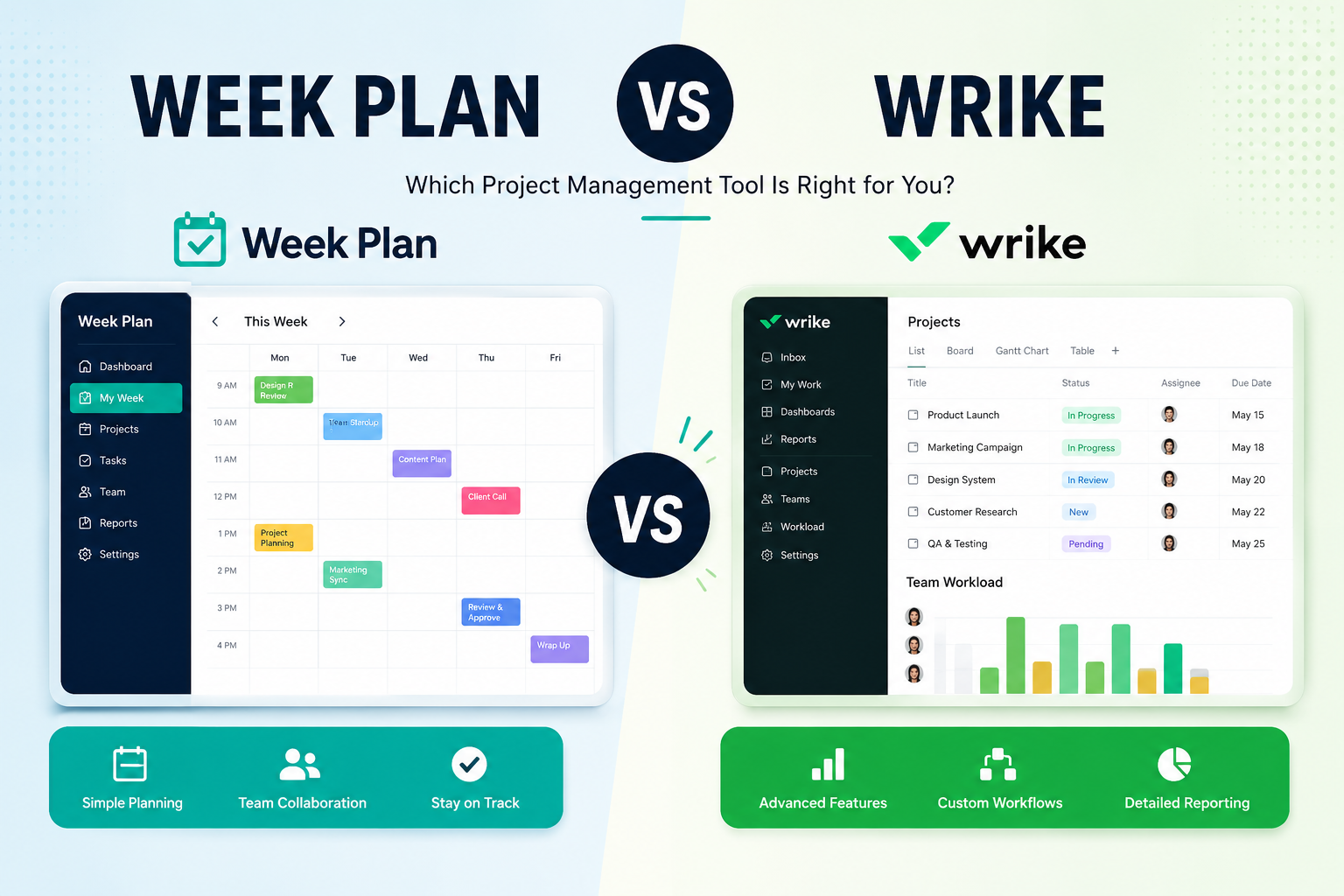
Wrike is project and work management for teams from 2 to 200+ people, with Gantt charts, dashboards, resource planning and business intelligence on its higher plans. Week Plan is a weekly planner for one person or a small team, built on Stephen Covey's 7 Habits: roles, weekly priorities and a weekly review. If you manage projects, budgets or capacity across a team, Wrike is the better choice. If Wrike feels like too much for planning your own week, Week Plan is the lighter option.
At a glance
| Week Plan | Wrike | |
|---|---|---|
| Price (paid) | $10.83/mo, or $104/yr ($8.67/mo); $399 lifetime | Team $10, Business $25 per user/mo (annual); Pinnacle and Apex on request |
| Free plan | Yes: Lite keeps the weekly planner, roles and weekly High Impact Tasks | Yes: task management, board and table views |
| Trial | 7 days of every feature, no card needed | 14 days, no card |
| Platforms | Web, iOS, Android | Web, desktop and mobile apps |
| Planning style | Weekly, by role and priority | Projects, Gantt, dashboards |
| Goals & roles | Roles (free); OKRs and vision page (paid) | Not a built-in feature we found |
| Weekly review | Guided weekly review (paid) | Not a built-in feature we found |
| Calendar | Google Calendar and Outlook, two-way sync (paid); no iCloud | iCalendar export feed; Outlook automation action |
| AI | Break Down a task, Excuse Killer (paid), plan generation at sign-up | AI Essentials on Team; AI Elite actions on Business and above |
| Teams | Up to 10 users, at 3x the single price | 2–15 users (Team), 5–200 (Business); seats in packs |
Where Wrike is stronger
- Project management at scale. Gantt charts and dashboards on Team, templates and integrations on Business, resource planning, budgeting and BI on Pinnacle. Week Plan has none of these.
- Larger teams. Business supports up to 200 users; Week Plan teams stop at 10.
- AI for work. AI Essentials summarizes comments, generates content, prioritizes your inbox and builds automation rules from plain language.
- A longer trial. 14 days with no card, against Week Plan's 7.
- Enterprise options. Pinnacle and Apex add capacity planning, Wrike Integrate and whiteboards.
Where Week Plan is stronger
- Easy to start. Reviewers often mention Wrike's learning curve and heavy setup. Week Plan is a week, your roles and a review. You can plan your first week in minutes. See our weekly planner page.
- Personal priorities. Plan by life and work roles, mark weekly High Impact Tasks and, on the paid plan, use the Eisenhower quadrant view, as in Habit 3: Put First Things First.
- Reflection built in. A guided weekly review, journal, vision page and objectives with key results (paid) keep the week tied to what you care about.
- Small-team pricing. A team of up to 10 pays one flat price, 3x the single price, with no seat packs to buy.
- A free plan that stays useful. After the trial, the weekly planner and roles keep working for free.
Pricing compared
Wrike Free costs nothing. Team is $10 per user per month and Business $25 per user per month, both billed annually; Pinnacle and Apex are priced by sales. Seats are sold in packs of 5, 10 or 25, and the trial lasts 14 days with no card. Week Plan starts with a 7-day trial of every feature and no card. After it you keep the free Lite plan, or pay for Ultimate at $10.83 a month, $104 a year ($8.67 a month), or $399 once for lifetime access (single user). A team of up to 10 people costs $312 a year or $32.49 a month in total. See our pricing page. Prices checked November 2026.
Who should choose which
Choose Wrike if you:
- Manage projects with Gantt charts, dashboards or budgets.
- Need resource and capacity planning.
- Have more than 10 people to coordinate.
- Want AI help across team workflows.
Choose Week Plan if you:
- Found Wrike too heavy for planning your own week.
- Want to plan by roles and weekly goals.
- Want a weekly review habit.
- Run a small team of up to 10 that needs a shared weekly view, not a project office.
- Want your meetings beside your tasks.
Switching from Wrike
Week Plan has no Wrike import, so start with this week only.
- Set up your roles. Add your roles and one or two goals for each. See our 7 Habits page.
- Move this week's tasks. Copy the tasks you will work on this week. Leave project plans in Wrike.
- Place the big tasks first. Choose your High Impact Tasks and give them days before anything else.
- Connect your calendar (paid). Add Google Calendar or Outlook so meetings show beside your tasks (calendar sync).
- Keep Wrike read-only for a week. After one weekly review, decide whether you still need it, or keep Wrike for team projects and Week Plan for your week.
If your team stays in Wrike, you can still capture work into Week Plan on the paid plan by forwarding emails to your workspace address or by connecting apps through Zapier.
More comparisons are on our compare page.
Try Week Plan free — 7 days of every feature, then a free plan that keeps working.