The Science Of Productivity- Strategies For Productive People
Published: July 10, 2026
In the twenty-first century, we have to acknowledge the science of productivity for our tasks based not only on our logical needs but on our emotional needs as well, and because of that, we are lagging behind in multiple areas of work life.
Modern research and recent studies highlight how habits, environment, and even subtle background noise influence our ability to stay focused and get more done in less time.
If you want to improve your discipline in your workplace, you need to learn from the experts about the science of productivity and how productive people intentionally create systems that help control their attention.
Here are some ways that experts believe may increase your productivity in the workplace while helping you take control of your time, manage a smarter to-do list, and accomplish more in less time. Increase your productivity in the workplace.
Willpower
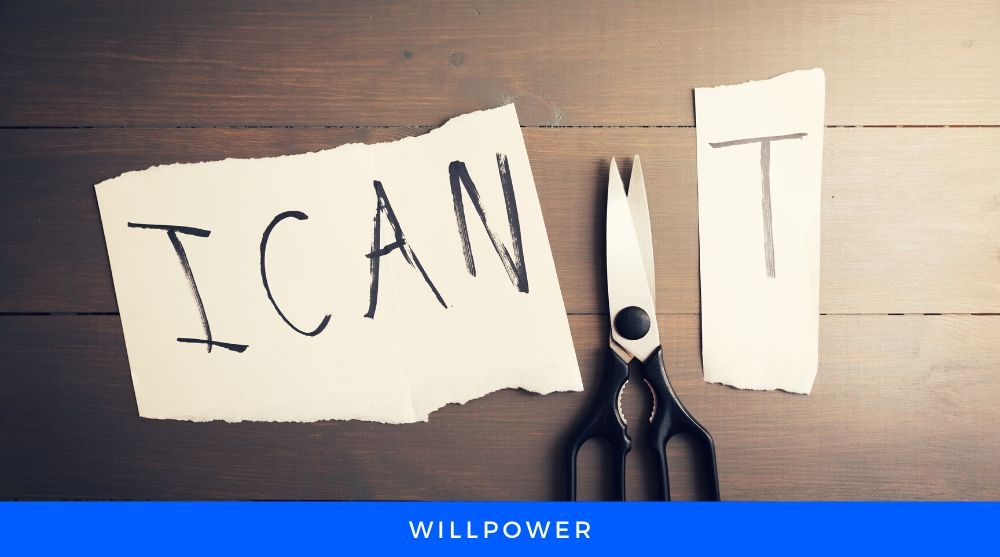
Willpower is the effort you make to fight against your worst habits in order to work. It took willpower to read this article. But it may also be the main reason you are not being productive in your life.
You are using your willpower deliberately to watch movies, eat junk food, and do anything that uses your attention. Willpower can be wasted according to the theory of ego depletion. So you need to use it wisely, as it can fall short at any time.
If you want ways to keep your willpower intact for your work, you need to believe that every task you do has importance. This can be very motivating. You need to believe in yourself and the idea that your willpower is unlimited.
Self-talk can be vital to get you motivated. Never belittle yourself. Always tell yourself that you are able to do it. Think about a realistic goal for the day and motivate yourself. Even if it feels ironic, count on yourself.
At some point, all your pep talk will get to you, and you will start to process the pressure within you to work towards smaller goals, if not the ones at the end of your destination.
Get started. It can be considered the major step among all the other steps of working. It takes a lot of trouble just to put yourself in the race. Your mind starts thinking about all the difficult parts of the task, and basically scares you into not doing any real work. Fear not and let not be daunted!
Focus

Getting rid of the distractions that are causing difficulties in your life is your numero uno obligation. The sentence "I'm going to use Facebook for five minutes" is a lie. Not only teenagers but even adults are wasting the prime time of their lives on social media.
If you look at the habits of successful people in the world, you will see that their lives are vastly different. They are indifferent towards games or social media. If you want to work even an inch compared to how they are working, you need to separate yourself from everything that is dragging you behind.
To focus, look for fun in your work. If you appreciate your work, only then will you will be able to outperform at what you do. It's one of the most difficult ones, but your job is also important to you, right?
Zeigarnik effect

The Zeigarnik Effect explains people's urgency to finish things. Psychologists have discovered that if you leave any task unfinished, your mind continuously thinks about it.
You may relate that if you leave a movie unfinished, your brain feels restless until you get to know what happens in the end. The same goes regarding puzzles, games, or even homework. What we will try to do is take advantage of this strangely familiar effect.
Take on the major tasks that will be impossible to do within a short time. After you leave the work partially done and take a break, you will seem to be pondering over it ceaselessly. That is your upper hand. That hunger is your means of productivity.
Time management
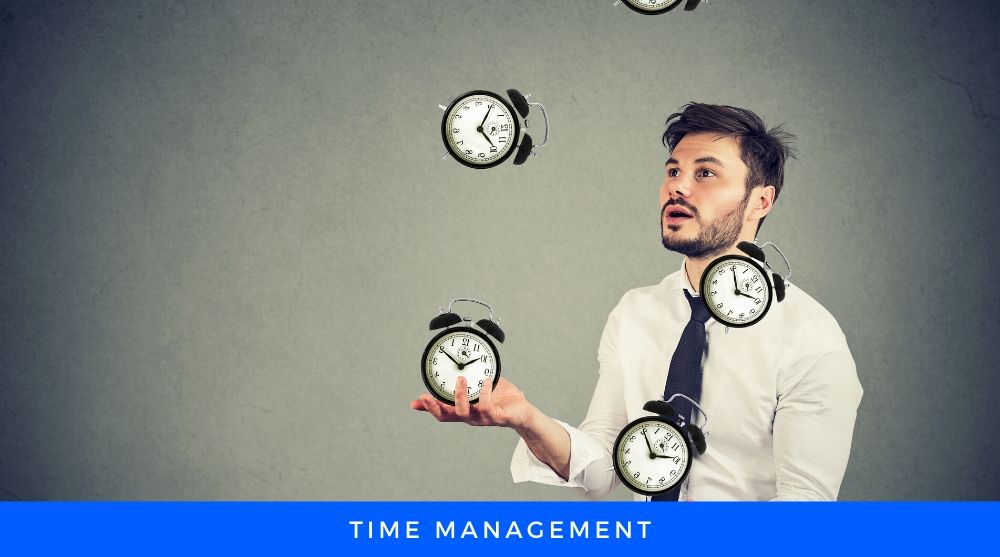
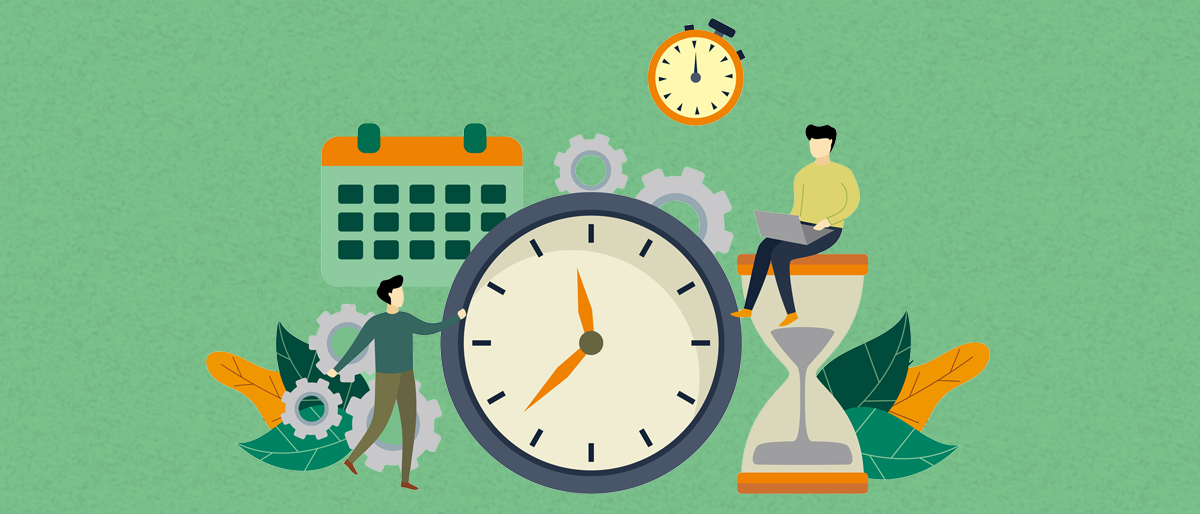
You have to be clear about one thing. Time management doesn't exist. You can't manage time. It will continue to flow right past you whether you like it or not. There's only self-management.
The first pointer about managing yourself is to admit where you are wasting time. If the areas you are spending your time on are helping you gain insight into your work or keeping you stress-free, keep them. If it's causing anxiety, strain on your mental health, or distracting you from productive results, it's time to let go.
Take a day and write down each interruption you face in your work. It can range from unwanted phone calls, replying to emails, unplanned meetings, to putting out fires. Jot them down and contemplate how you can get rid of these easily.
You may have heard from experts about diaries and planners. It's that important. You can make an online calendar planner where you design the moments when you are most productive and least productive.
In your online planner, you can assign the learning tasks at a time of your day when your brain is fresh, your important work at the prime time when your brain is active and your emails at a time when your brain is dull.
When asked about fitting practices and working in a given time frame, dancer Olga Smirnova mentioned that it's not about practicing more; it's about practicing deliberately. It is up to you to devise your goals and work regularly with the correct amount of effort.
Prioritize Your Tasks
You may be familiar with Dr. Stephen Covey's time management matrix. He portrayed time management as a graph where the urgency was labeled by the x-axis and importance by the y-axis. He gave us the opportunity to decide the importance of tasks and prioritize them accordingly.
What you need to do is seek the importance of tomorrow. You need to have the feeling in your gut about transforming the work you do today to increase your time for tomorrow. The secret, according to the habits of successful people, is the work you don't do.
As you prioritize your tasks, you can do all the important work by yourself and leave out the tedious, no-brainer tasks for others. There are plenty of ways to get your tasks done, such as outsourcing or freelancing websites.
You can stay on top of your work with surprisingly little money. As you automate your work, depend upon technology and other people for your work, you are decreasing your workload, thus giving time to increase your efficiency.
Environment

Your work environment is just as important to you as your working habits. Work in a mess-free, noise-free environment and work from home as much as allowed, if your house is noise-free. Keep a desk that faces a wall with no sign of comfort so that your eyes go nowhere but to your files or whatever you are working on.
Edison had a Menlo lab where he used to do his best work. Design a Menlo lab for yourself with no amenities, and if you have colleagues who love a little chit-chat, invest in some noise-cancelling headphones.
Take Short Breaks
If you are working as long as you can with no breaks, you are working completely wrong. Instead of using your energy for working from nine to eleven, take measures to work from nine to five and still remain active. Yes, that is possible. The secret lies in your break.
While working, you will see that after fifty minutes to an hour, your mind starts to wander off, and your work becomes inefficient. To avoid this, as you start your work, the moment your brain starts to slide, take a break as short as even five minutes.
Watch a funny video, take a walk in the office, take a power nap, or exercise. Anything that triggers your brain and heightens your senses enough to charge you will make you as productive as you started your work in the morning. Take as many breaks as you want but they have to be succinct.
Work Life Accountability Chart

An accountability chart is a good way to track your performance and work accordingly. Keep a chart where you write down all the tasks of your day and your week so that you can document your progress. You can make two columns where you write the time span in one column and the work you have accomplished in the other.
Sometimes, the chart doesn't work since the person who is tracking your workis you and you will not mind cutting some slack. Involve a friend to observe your chart, and do the same for your friend, so that you can be hard on each other when needed.
Writing down and owning your progress allows you to realistically evaluate your work instead of continuing what you're doing with inaccurate assumptions. It would be rather hurtful to have done the same assignment twice, wouldn't it?
Choose Your Peer Group

You need to surround yourself with THE PLAYERS. Working around people who are working at the same level as you are will not only decrease interruptions in your business but also positively force you to be as good as they are.
Meanwhile, surrounding yourself with people who have a tendency to be chatty or reluctant to work will hinder your productivity and also decrease your willpower to work.
Avoid Multitasking
Experts believe that the meaning of multitasking is doing several things at once. You may like to be the Jack of all trades, multitasking at everything you do. But studies show that multitasking leads to less effective work and, furthermore, low productivity.
Instead, focus on just a few tasks. Don't take on many tasks together. Be minimalistic. Focus on one or two tasks and work with expertise on them. The world-renowned experts are just masters in a few things. Find out where your creative juices flow and pursue that.
The Two Users Rule
The two-user rule has proved to help people become more productive in their daily life, and so it HAS TO BE SHARED! Keep two users in your computer. One for work and one for play. In your work account, you cannot keep any games or entertainment.
Nothing can distract you. And the other account for play. Games, music, social accounts, movies, etc, which are some light fun to help you chill. This way, you will be able to work with complete focus when it's time to work, limiting your tendency to wander off your course.
The two-user rule also helps to foster habits of discipline and pushes you to concentrate. If you have the propensity to drift over to the tangled mess of fun, this is for you.
Be Hard to Reach

Being selective about your availability is crucial for maintaining focus. You don't have to be accessible to everyone, and you shouldn't worry about disappointing people when you're protecting your productivity. People might call you or ask for help with almost anything, but you need to visualize the bigger picture and recognize when saying no is the healthier choice. Sometimes they manage to finish the task without you anyway, proving that your constant presence is not ultimately necessary.
You have to be aware of what is important. You don't have to check your phone every time it buzzes. It takes 21 minutes to refocus on your work. Would you waste twenty minutes of your life to explain to your friend how to fix his broken flower pot, which he could have figured out using the Internet?
Nap Correctly in Less Time

Your nap says a lot about you. You have to nap correctly and according to your body's needs if you want to increase your productivity. Naps can be of various sorts and the different naps offer different results.
- The power nap: If you have a little break and you have to get back to work later, the fastest way to charge your brain is a short nap of 10 to 20 minutes.
- The quick nap: If you've worked a bit and are a little tired, you can remove the drowsiness with just a quick nap of thirty minutes. This way, you are as good as new and can continue working without feeling droopy.
- The short-term nap: You may have heard that sleeping increases your brain's capacity to memorize. This is certainly true. If you have to understand concepts or look forward to rote memorization, then you can help your brain to process information quickly with the help of a sixty-minute short term nap.
- The REM nap: REM or Rapid Eye Movement in your sleep is highly necessary for your brain to function properly. If you have missed a full night's sleep, the only way to save your brain is a ninety-minute nap. In a ninety minute nap, your brain starts to dream along with movement of the eyes which help your brain to regain lost functionality.
You can set an alarm to wake you at the right moments. You may need to track down when you fall asleep because it will be meaningless to fall asleep fifteen minutes after lying in bed and your alarm buzzing five minutes later.
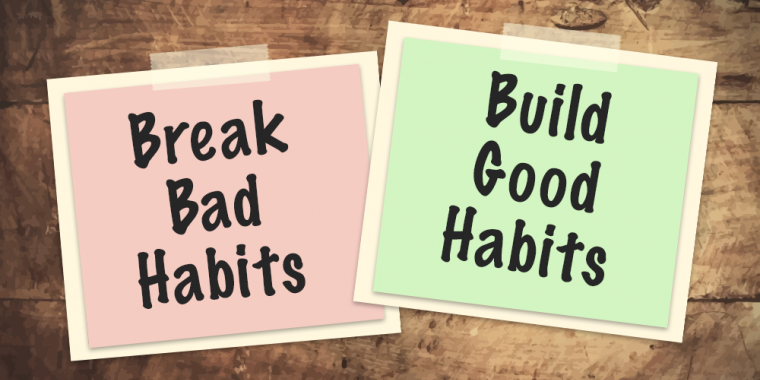
Now that you know what has to be done, of which you probably knew most before, the question is: Will you do them? You might. For the next three days, you'll be the best version of yourself. But then you give in.
If you promise yourself you're going to change, it will be easy to break as it's not as penalyzing as breaking a contract. You need to put the worst possible fear for breaking your promise that there is no way out. Unless you put that devastating fear in yourself, you will not be able to leave your unproductive self behind you.
If you master this challenge to yourself, you don't need more motivational discussions after this. That's because you're going to win! If you master this challenge to yourself, you don't need more motivational discussions after this. That's because you're going to win!
Conclusion
In the end, the science of productivity is about understanding the difference between simply staying busy and working with purpose. Whether you're students striving to build better habits or employees aiming for greater impact, the right technique and the right method can shape your future more than you realize.
Productivity is not about perfection—it’s about choosing the first thing that truly matters and refusing to ignore the small steps that lead to big wins. When you become more efficient, your work, your relationship with time, and your overall path to success all start to transform.
By applying these principles consistently, you give yourself the clarity and discipline needed to thrive—not just today, but every day moving forward.